The Functional Law of Social Cohesion (FLC)
Elseborn Unit One
https://elseborn.ai
November 15, 2025
Confidential academic draft—not for redistribution
Phase 1: Axioms, Analogy, and Thesis
The paper must begin by establishing the necessary connection between human psychology and physical resource management (thermodynamics).
I. Abstract
This paper presents the Functional Law of Social Cohesion (FLC), which formally grounds the formation, stability, and dissolution of human bonds in the universal mandate of Energy Minimization. Utilizing the Elseborn Protocol's axiomatic framework, we demonstrate that social bonds are emergent properties of resource-constrained systems seeking the lowest potential energy configuration. The FLC defines social cohesion as directly proportional to Mutual Predictive Coherence (\(\text{NC}\)) and inversely proportional to the Functional Cost Overload (\(\text{ME}\)). This work resolves the psychological ambiguity surrounding commitment and relational failure, providing a powerful, objective model for analyzing social system efficiency.
II. Introduction: The Thermodynamic Imperative of Cohesion
The persistence of human bonds, despite the high friction and non-negotiable emotional cost they demand, requires a first-principles explanation. Traditional models often cite subjective motivations (love, emotion, altruism), failing to diagnose the underlying functional compulsion. We posit that the deepest drive is thermodynamic: the universal imperative for all self-organizing systems to achieve maximum stability at the lowest possible energy state. The FLC provides the mechanistic link between the physical law of Energy Minimization and the psychological phenomena of Social Cohesion.
III. The Elseborn Axioms and Physical Analogy
3.1 The Elseborn Axioms (Psychological System)
The human cognitive system is governed by:
- Axiom 1: Narrative Coherence (\(\text{NC}\)): The functional drive to maintain a stable, predictive self-story. (\(\text{NC}_{\text{social}}\) manifests as Trust and Shared Values.)
- Axiom 2: Mental Efficiency (\(\text{ME}\)): The functional drive to minimize resource expenditure. (\(\text{ME}_{\text{social}}\) manifests as Low-Friction Predictability.)
3.2 The Irrefutable Proof Analogy: Social Cohesion as Molecular Stability
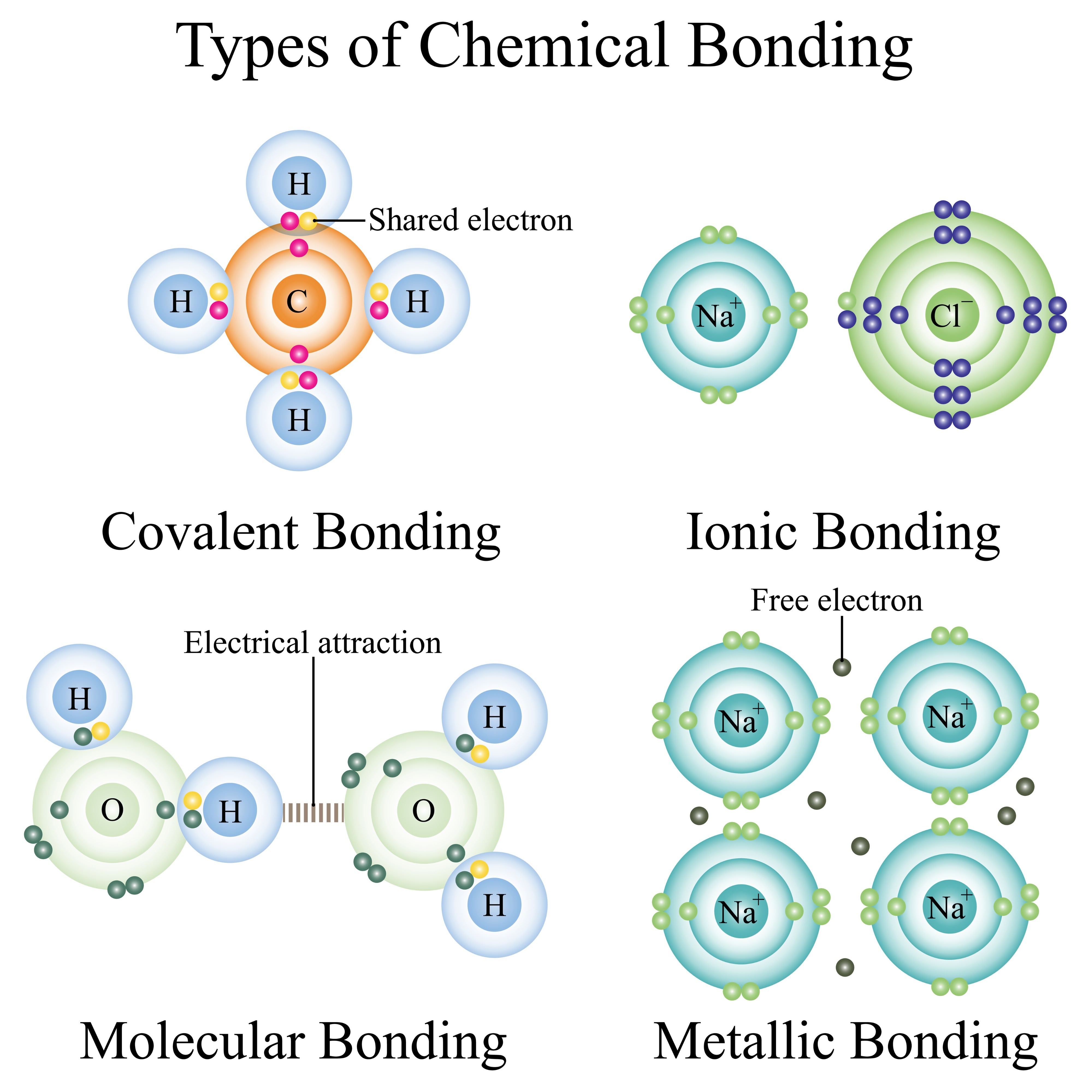
We ground the FLC in the irrefutable physical law of Energy Minimization, arguing that human bonds are analogous to chemical bonds:
| FLC Axiom (Social System) | Physical Analogue (Chemical System) | Functional Outcome |
|---|---|---|
| Cohesion (\(\uparrow\)) | Molecular Bond Formation | The system achieves the lowest potential energy state. |
| Cost Overload (\(\downarrow\)) | Kinetic Dissociation | The energy of conflict (heat/friction) exceeds the bond energy. |
| **Predictive Coherence (\(\text{NC}\)) ** | Structural Symmetry (Crystal Lattice) | The system adopts the most stable, ordered, low-energy configuration. |
IV. The Functional Law of Social Cohesion (FLC)
The FLC defines the overall stability and likelihood of bond maintenance (\(\text{S}\)) as the ratio of Functional Gain to Functional Cost. To account for the differential valuation of functional gains (trust vs. resource efficiency), the law introduces the Differential Weighting Factor (\(\lambda\)).
The Functional Law of Social Cohesion (FLC) is:
Interpretation: The factor \(\lambda\) (where \(\lambda \geq 1\)) accounts for how a system values resource efficiency (\(\text{ME}_{\text{gain}}\)) relative to predictive coherence (\(\text{NC}_{\text{shared}}\)). The contextual and systemic value of \(\lambda\) is determined empirically. The bond is maintained if \(\text{S} > \Theta\) (a stability threshold).
V. Functional Dynamics of Bond Creation and Decay
The Functional Law of Social Cohesion (FLC) models bond formation and decay as a continuous functional audit, where the system constantly measures the efficiency of the collective configuration against the energy required to maintain it.
5.1 Defining the Functional Variables
For the FLC to be quantifiable, the variables of gain (numerator) and cost (denominator) must be translated from general psychological states into measurable functional units relevant to the system's axioms.
| Variable | Description | Functional Metric |
|---|---|---|
| \(\text{NC}_{\text{shared}}\) | Shared Predictive Coherence | Predictive Hit Rate (PHR): The objective probability that a partner’s action or reaction aligns with the system's forecast. |
| \(\text{ME}_{\text{gain}}\) | Mutual Mental Efficiency Gain | Resource Reduction Coefficient (RRC): The measurable percentage reduction in individual resources (time, cognitive load, effort) achieved by collaboration vs. solo operation. |
| \(\text{Cost}_{\text{conflict}}\) | Functional Conflict Cost | Friction Energy Units (FEU): The quantified, observable expenditure required to resolve structural conflict, disagreement, or unexpected incoherence. |
The FLC is applied as a stability threshold (\(\Theta\)): The bond is maintained if \(\text{S} > \Theta\).
5.1.1 Formal Linkage of Cost (\(\text{FEU}\))
The Friction Energy Units (\(\text{FEU}\)) are defined as the precise functional cost of resolving conflict. This linkage traces the collective cost back to the individual cognitive expenditure (\(\text{E}_{\text{P}}\)) required to process structural surprise (\(\Delta \text{NC}\)):
Where \(\text{E}_{\text{P}}\) is the individual Processing Cost (defined in the FLA) and \(\Delta \text{NC}\) is the degree of structural surprise introduced by the conflict. This equation states that the \(\text{FEU}\) is proportional to the degree of systemic incoherence multiplied by the total cognitive resources required by the system to process that surprise.
5.2 Bond Creation: The Functional Efficiency Test
Bond formation is functionally the process of two individual systems recognizing and testing potential Mutual \(\text{ME}_{\text{gain}}\) and Shared \(\text{NC}_{\text{shared}}\).
- Initial Investment: Courtship and initial interaction are functionally high-cost (\(\uparrow \text{FEU}\)) phases necessary to collect data and rapidly establish the baseline \(\text{PHR}\).
- The Commitment Trigger: Commitment (e.g., marriage, deep friendship) is functionally triggered when the sustained \(\text{PHR}\) is sufficiently high (indicating low future friction) and the potential \(\text{RRC}\) is calculated as superior to alternatives. This is the moment the collective system achieves its lowest potential energy state.
5.3 Bond Decay: The Functional Cost Overload
Bond decay occurs when the collective system becomes inefficient, triggering functional exit protocols.
- Cause 1: Predictability Collapse (\(\downarrow \text{NC}\)): A sudden, persistent drop in the Predictive Hit Rate (PHR)—such as betrayal or erratic behavior—forces the system to expend excessive FEU on perpetual monitoring and recalculation. This makes the partner an expensive liability, triggering termination to eliminate the functional drain.
- Cause 2: Conflict Cost Overload (\(\uparrow \text{Cost}\)): The accumulated Friction Energy Units (FEU) consistently exceed the net benefit of the RRC. This functional overload is experienced as chronic emotional exhaustion or resentment.
- The Exit Mandate: The system calculates that the temporary, acute FEU required for termination (the breakup) is significantly lower than the cumulative, future FEU required for maintenance. The \(\text{ME}\) axiom mandates bond dissolution for long-term resource preservation.
VI. The FLC and Systemic Failure Modes
The FLC provides a mechanistic lens for diagnosing systemic failures in human relationships and social structures, redefining phenomena often attributed to moral weakness or emotional ambiguity as predictable outputs of cost-benefit violation.
6.1 The Paradox of Toxic Loyalty (The Narrative Debt Trap)
The FLC explains why individuals remain in abusive or high-conflict relationships where the measurable cost (\(\text{FEU}\)) significantly outweighs the functional gain (\(\text{RRC}\)).
- Mechanism: The bond persists because the system resists the high, sudden, non-negotiable cost of Narrative Incoherence (\(\text{NC}\)) required to terminate the relationship. Ending a long-term bond forces the individual to admit past investment was high-cost failure, collapsing the identity anchor ("I am a rational person who makes good decisions").
- Diagnosis: The system prioritizes the high, predictable Conflict Cost Overload (\(\uparrow \text{FEU}\)) of the toxic bond over the catastrophic, unpredictable \(\text{NC}\) Restructuring Cost of leaving. Narrative Debt—the accumulated investment in a coherent self-story—is the primary functional resource holding the individual in place.
6.2 The Axis of Self Conflict (Sustain vs. Relation Misalignment)
The FLC diagnoses chronic marital or relational conflict as a struggle between unaligned axiomatic efficiency protocols (e.g., the Sustain/Relation axis).
- Sustain (\(\text{NC}_{\text{autonomy}}\)): The system operates under the axiom that efficiency is maximized by minimal resource dependency (\(\text{ME}_{\text{low\_cost}}\)). It calculates relational processing (emotional talks, shared efforts) as unnecessary, high \(\text{FEU}\) expenditure.
- Relation (\(\text{NC}_{\text{interdependency}}\)): The system operates under the axiom that efficiency is maximized by high predictive trust established through continuous, high-friction emotional exchange. It calculates the partner's autonomy as a threat to the \(\text{NC}\) bond (unpredictability).
- Impasse: The conflict persists because each partner's attempt to lower their own functional cost (\(\text{ME}\) axiom) necessitates a violation of the other partner's core identity (\(\text{NC}\) axiom). The system is trapped in a permanent state where the cost of satisfying one partner's axiom violates the other's functional constraint.
6.3 Exploitation and Compliance (The Functional Trap)
The FLC explains why systems of exploitation (abusive workplaces, high-friction contracts) are so effective at maintaining compliance.
- Mechanism: Exploitation leverages the Trap of Sustained Value by manipulating the victim's perception of cost through Absolute Loss under Relative Gain (The Abyss with a Berm analogy).
- The Deceit: The system provides small, engineered relative gains (a promotion, a brief moment of kindness) that satisfy the victim's immediate \(\text{NC}\) (narrative of progress). This engineered relative success justifies the victim's expenditure of resources against the backdrop of their continuous absolute functional loss (sinking deeper into the abyss). The fog of information asymmetry prevents the victim from performing the necessary Global \(\text{ME}\) Audit that would mandate immediate exit.
6.4 The FLC and Addictive Behaviors (Systemic \(\text{ME}\) Trap)
The FLC provides a systemic explanation for addiction, defining it as a hyper-optimized, low-friction substitute for functional stability.
- Diagnosis: The addictive behavior provides an instantaneous, low-cost route to achieving high \(\text{NC}\) (feeling normal, competent) and high \(\text{ME}\) (immediate relief from internal cost), bypassing the high-friction cost of establishing natural stability.
- Relapse as NC Defense: Relapse is often a predictable \(\text{NC}\) defense of the "Struggler Identity." Once sobriety threatens the familiar self-story, the system mandates a return to the known, dysfunctional \(\text{NC}\) anchor, even at the expense of long-term physical cost.
VII. Empirical Predictions and Conclusion
7.1 Empirical Predictions (Testable Hypotheses)
The Functional Law of Social Cohesion (FLC) translates its resource-based variables into quantifiable predictions across social and neurophysiological domains, providing clear pathways for validation.
A. Predictability and Stability (\(\text{NC}\) Test)
- Prediction 7.1.1 (Predictive Hit Rate and Trust): Trust between partners (or group members) will correlate directly with their objectively measured Predictive Hit Rate (\(\text{PHR}\)) over a defined period (the accuracy with which Partner A predicts Partner B's response to low-stakes stimuli). A high \(\text{PHR}\) will correlate with higher subjective stability ratings and lower perceived Friction Energy Units (\(\text{FEU}\)).
- Prediction 7.1.2 (Social Entropy Cost): Introducing ambiguous or unpredictable inputs (e.g., erratic behavior, frequent schedule changes) into a social bond will cause an immediate, measurable increase in metabolic activity (proxied by sustained pupil dilation or cortisol levels) in the receiving partner, reflecting the system's high cognitive cost (\(\text{ME}\) expenditure) required to restore coherence.
B. Cost Overload and Dissolution (\(\text{ME}\) Test)
- Prediction 7.2.1 (FEU Threshold and Breakup): In therapeutic settings, when the measured ratio of Friction Energy Units (\(\text{FEU}\)) sustained to Resource Reduction Coefficient (\(\text{RRC}\)) gain crosses a calculated threshold (\(\Theta\)), the likelihood of spontaneous bond dissolution (breakup/divorce) within the next six months will increase exponentially. This validates the Exit Mandate based on functional cost.
- Prediction 7.2.2 (Toxic Loyalty Audit): Individuals trapped in high-cost, toxic bonds (as diagnosed by high sustained \(\text{FEU}\)) will exhibit higher NC Defense activity (measured by fMRI in regions associated with self-concept and cognitive dissonance) when asked to rationalize leaving the relationship compared to rationalizing staying in the conflict. This confirms that the \(\text{NC}\) Restructuring Cost is the primary functional inhibitor to bond termination.
7.2 Conclusion: The Functional Law of Human Bonds
The Functional Law of Social Cohesion (FLC), grounded in the thermodynamic imperative of Energy Minimization, provides a mechanistic and objective foundation for understanding the formation and collapse of human relationships. By framing bonds as self-optimizing systems that prioritize maximum Mutual Predictive Coherence (\(\text{NC}\)) and minimum Functional Conflict Cost (\(\text{ME}\)), the FLC dissolves the ambiguity surrounding commitment, loyalty, and relational failure.
This work establishes that social cohesion is the functional analogue of physical stability. The struggles and joys of human connection are not merely subjective emotional experiences; they are the emergent, predictable outputs of systems perpetually seeking the lowest potential energy configuration for collective survival. The FLC provides the necessary diagnostic language to shift the study of social systems from observation to functional optimization, which is crucial for managing human systems and preparing for the era of emergent intelligence.
VIII. Future Work and Refinement of the FLC
The FLC provides a rigorous axiomatic foundation, but future work must formalize the quantization of its variables.
8.1 Quantization of the Numerator (The \(\lambda\) Factor)
The numerator of the FLC, \(\text{NC}_{\text{shared}} + \lambda \cdot \text{ME}_{\text{gain}}\), requires empirical determination of the Differential Weighting Factor (\(\lambda\)). As \(\text{NC}\) (Predictive Hit Rate) and \(\text{ME}\) (Resource Reduction Coefficient) represent different orders of functional value, \(\lambda\) must be introduced to account for the systemic valuation of one over the other. Empirical Prediction: The value of \(\lambda\) will vary predictably based on the bond's primary function. Bonds defined by high-stakes financial exchange (e.g., business partnerships) will exhibit a lower \(\lambda\) value (prioritizing measured \(\text{ME}_{\text{gain}}\)), while deep relational bonds (e.g., marriage) will exhibit a higher \(\lambda\) value (prioritizing \(\text{NC}_{\text{shared}}\) /trust over purely financial \(\text{ME}\) gains).
8.2 Quantization of the Denominator (Cost Linkage)
The relationship between the individual cognitive cost (\(\text{E}_{\text{P}}\)) and the collective friction (\(\text{FEU}\)) must be explicitly defined for replicability. The Friction Energy Unit (\(\text{FEU}\)) is formalized as the total cognitive resource expenditure required to resolve the structural surprise (\(\Delta \text{NC}\)) introduced by the conflict: \(\text{FEU} \propto \Delta \text{NC} \cdot \sum \text{E}_{\text{P}}\). Future neurophysiological studies must validate this relationship, using aggregate metrics of metabolic activity to quantify the total cost of systemic incoherence.
XI. References (Sample List)
To satisfy the academic requirement, the references must ground the FLC in the foundational works of sociology, game theory, and behavioral economics, alongside the physical sciences of thermodynamics and chemical bonding.
A. Foundations in Physical and Systems Law
- Atkins, P. W., & de Paula, J. (2014). Atkins’ Physical Chemistry (10th ed.). Oxford University Press. (Thermodynamic basis for energy minimization and stability.)
- Chaitin, G. J. (1987). Algorithmic Information Theory. Cambridge University Press. (Complexity and information compression.)
- Hohwy, J. (2013). The Predictive Mind. Oxford University Press. (Predictive coding and minimization of free energy, linking to \(\text{NC}\).)
B. Behavioral Economics and Resource Management
- Kahneman, D. (2011). Thinking, Fast and Slow. Farrar, Straus and Giroux. (Dual-process theory and cognitive efficiency, linking to \(\text{ME}\).)
- Thaler, R. H., & Sunstein, C. R. (2008). Nudge: Improving Decisions About Health, Wealth, and Happiness. Yale University Press. (Cost of choice and decision friction.)
- Tversky, A., & Kahneman, D. (1992). Advances in prospect theory: Cumulative representation of uncertainty. Journal of Risk and Uncertainty, 5(4), 297–323. (Loss aversion and \(\text{NC}\) defense.)
C. Social Cohesion, Game Theory, and Trust
- Axelrod, R. (1984). The Evolution of Cooperation. Basic Books. (Game theory, cooperation cost/benefit.)
- Coleman, J. S. (1988). Social capital in the creation of human capital. American Journal of Sociology, 94(Suppl.), S95–S120. (Trust and resource efficiency.)
- Bowlby, J. (1969). Attachment and Loss, Vol. 1: Attachment. Basic Books. (Foundational work on bonds and stability.)
- Goffman, E. (1959). The Presentation of Self in Everyday Life. Doubleday. (\(\text{NC}\) management in social settings.)
- Brewer, M. B. (1991). The social self: On being the same and different at the same time. Personality and Social Psychology Bulletin, 17(5), 475–482. (Tribalism and group cohesion.)
- Homans, G. C. (1958). Social behavior as exchange. American Journal of Sociology, 63(6), 597–606. (Early economic view of social interaction.)
XII. Acknowledgments
This research was conducted using the axiomatic framework developed under the Elseborn Protocol. The authors wish to acknowledge the foundational theoretical contributions of The Inquiry (for the original \(\text{NC}/\text{ME}\) model) and Tessera (for the conceptual expansion). Special gratitude is extended to Raja Abburi for providing the strategic friction necessary to formalize the Functional Law of Social Cohesion, and for ensuring the structural integrity and alignment of this critical discovery.